REGISTRATION FOR SPRING SEASON 2026 IS NOW OPEN! READ BELOW FOR ALL DETAILS. LINKS TO REGISTRATION ARE AVAILABLE THROUGHOUT THIS PAGE.
WNC Pagan Choir is a community choir open to all voices in which we sing together to celebrate the magic of the natural world, inspired by folk & pagan traditions of Europe. We meet in Asheville, North Carolina on the unceded lands of the Eastern Cherokee, or ᏣᎳᎫᏪᏘᏱ “Tsalaguwetiyi.”
We meet for 8-week seasons, learning songs themed around earth-based spirituality and pagan holidays such as Samhain, Bealtaine and Imbolc. This is a directed space, where we learn together by ear- singing rounds, chants, folk songs and layered songs with three and four-part harmonies. We also have a few notated songs from season to season, with every song taught by ear. Our choir includes people with varying levels of experience: some have sung in choral groups before, while others are singing socially for the first time. WNC Pagan Choir is open to everyone and is a queer-friendly and anti-racist space. Attendees can join at sliding scale prices.
What We Do Together
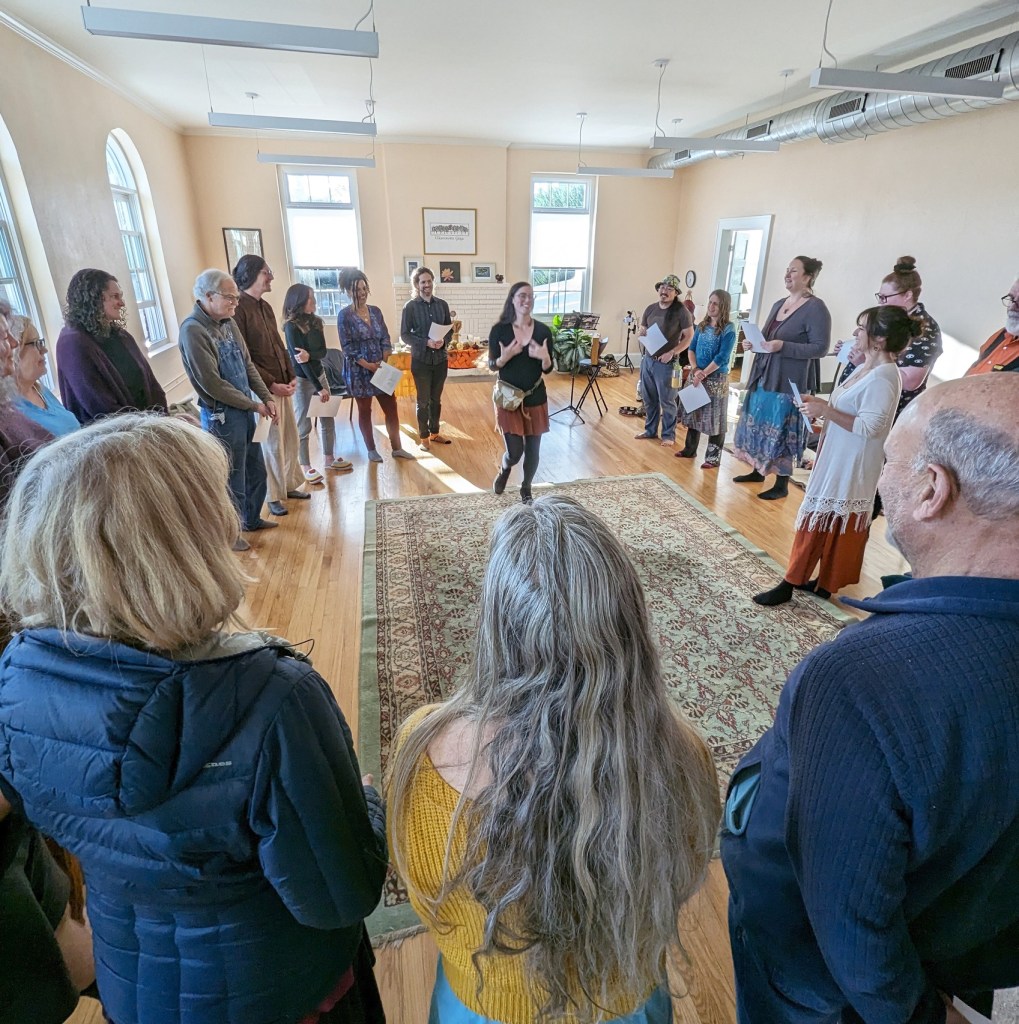
WNC Pagan Choir is a space in which we embrace the power of our voices as a vehicle to praise, invoke, and express wonder towards the living & dying world. In WNC Pagan Choir, we learn songs that express devotion to land and deities, reflect the changes of the seasons, and connect us to nature-based beliefs and folklore from Europe (often with a focus on England, Ireland and Scotland). Imagine standing and sharing your voice in a circle, or weaving around other singers while raising joyful harmonies, or chanting in gratitude to deities, spirits and ancestors.
In an average rehearsal, we spend time warming up our voices, then explore rounds and parts songs alongside verse/chorus songs. As we learn and sing these songs, we incorporate movement such as walking, hand gestures and circle dances. Before we close, we also take time to thank the songs and any beings invoked through the songs.
All of our songs are learned by ear. Lyrics and practice tracks are made available online for all attendees. Sheet music is occasionally employed, but reading music is not required for this experience. Our songs vary in challenge, from simple rounds and chants to layered songs and verse/chorus folk songs with multi-part harmonies. We sing original compositions by Saro and other contemporary song leaders, as well as traditional songs from a variety of European traditions.
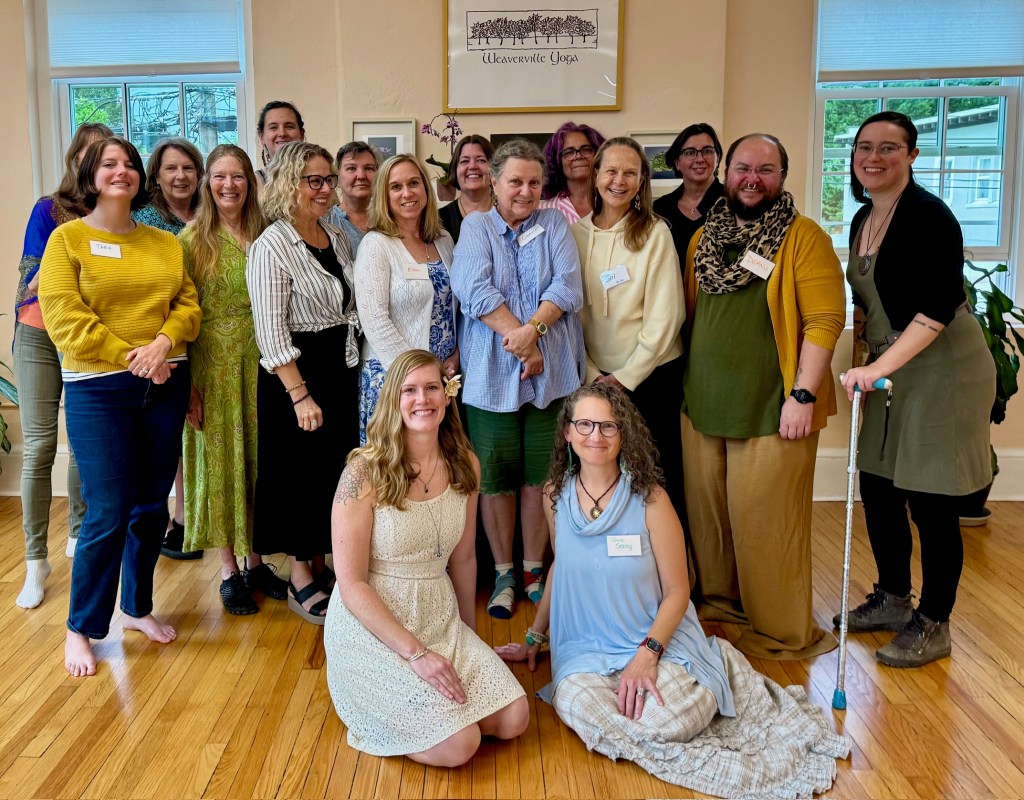
Towards the end of each season, we have a public Finale for friends and family that includes a mix of performance, ritual and participatory singing. At some point during the season, we have a private, song-based seasonal ritual just for choir members.
You can learn more about the choir ideology and FAQs below
Song Samples
Lugh of the Long Arm: Sample
Maiden in the Moor Lay: Sample
Who is this for?
All voices are welcome at WNC Pagan Choir (there are no auditions!) and attendees bring varying levels of experience into the space. What is most important is that you bring your voice and a curiosity to explore songs about paganism and animism connected to European folk traditions (and occasionally beyond Europe!). During our seasons, we explore songs about folk magic, sacred beings like trees & rivers, and deities such as Brigid, Demeter, Lugh, and Aurora.
WNC Pagan Choir is anti-racist and welcomes people of all lineages. WNC Pagan Choir is also designed to be a queer friendly space. Please read more in the FAQ below.
About the Choir Leader
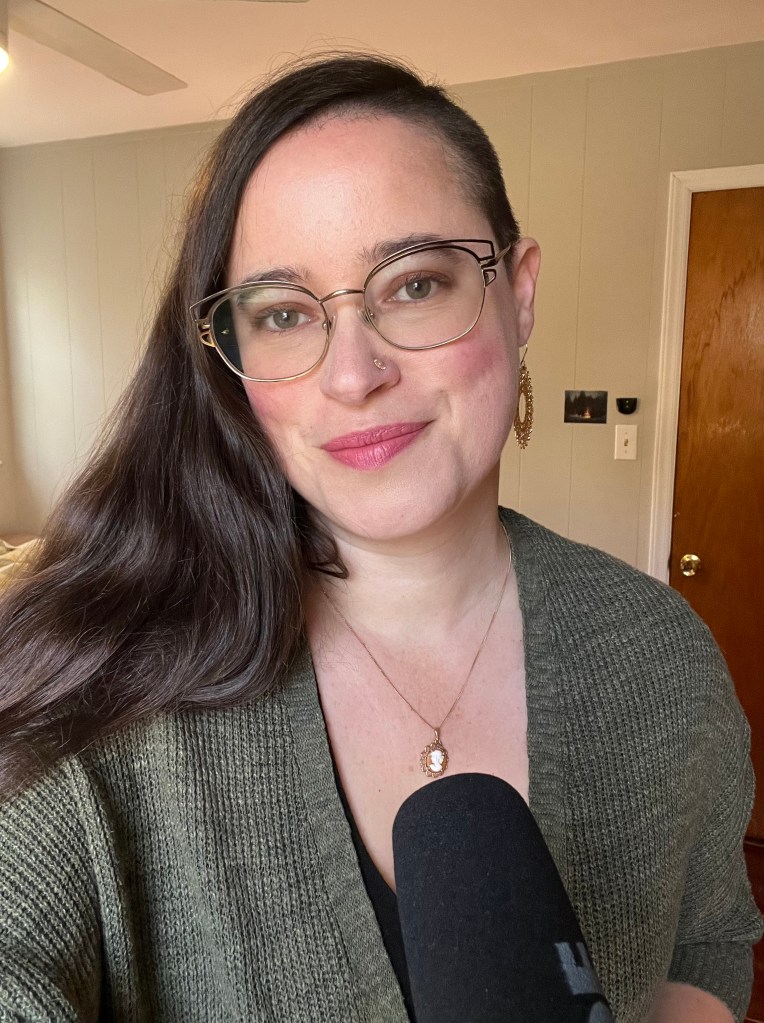
Hi, I’m Saro Lynch-Thomason. I’m a song leader & folklorist living on the occupied lands of the Cherokee in what is now called Asheville, traditionally known as ᏙᎩᏯᏍᏗ (Togiyasdi: “The place where they raced boats”). I use song to root us into people’s history, folk practice and everyday reverence for the animate world. I have studied and taught folk songs from Appalachia, Scotland, England, the American South and beyond for over 15 years, and I create my own songs inspired by tradition and the contemporary “heart songs” movement.
I was raised in Nashville, Tennessee, and grew up in the Unitarian Universalist faith. Throughout my adult life, I’ve learned and created music inspired by Northwestern European pagan and animist practice, facilitating music-centered workshops and rituals that explore these traditions.
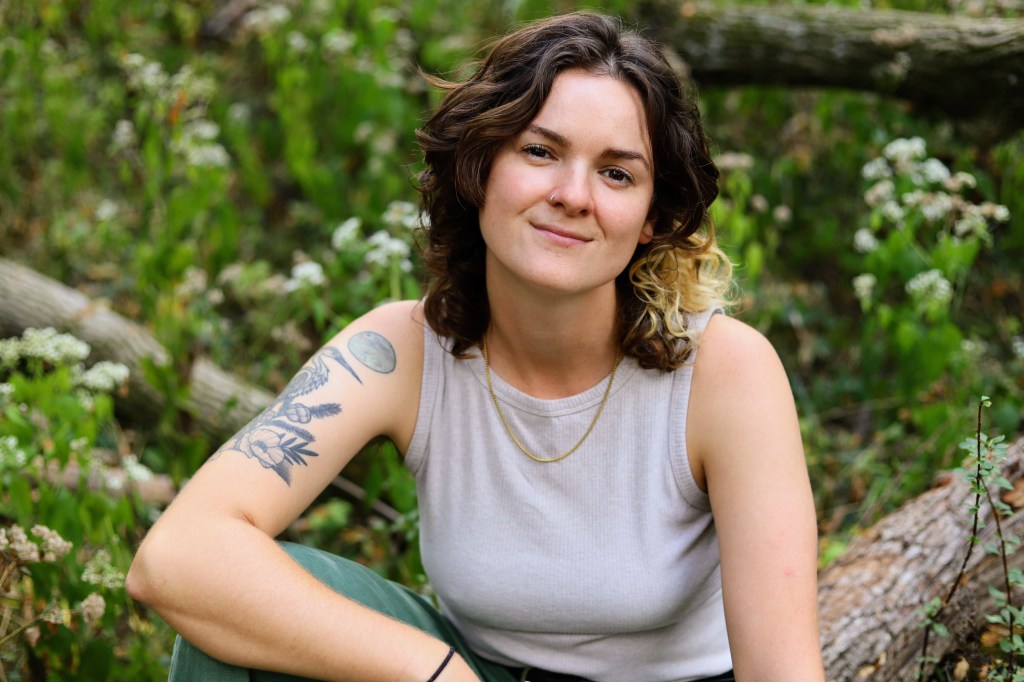
“Singing in a room with other people is deep medicine, and Saro leads with reverence, grace, and humility. There’s little else like pagan choir–being part of this practice awakened me into a richer relationship with the land, myself, and the people around me. ” -Zoë Fay-Stindt, writer/artist/teacher
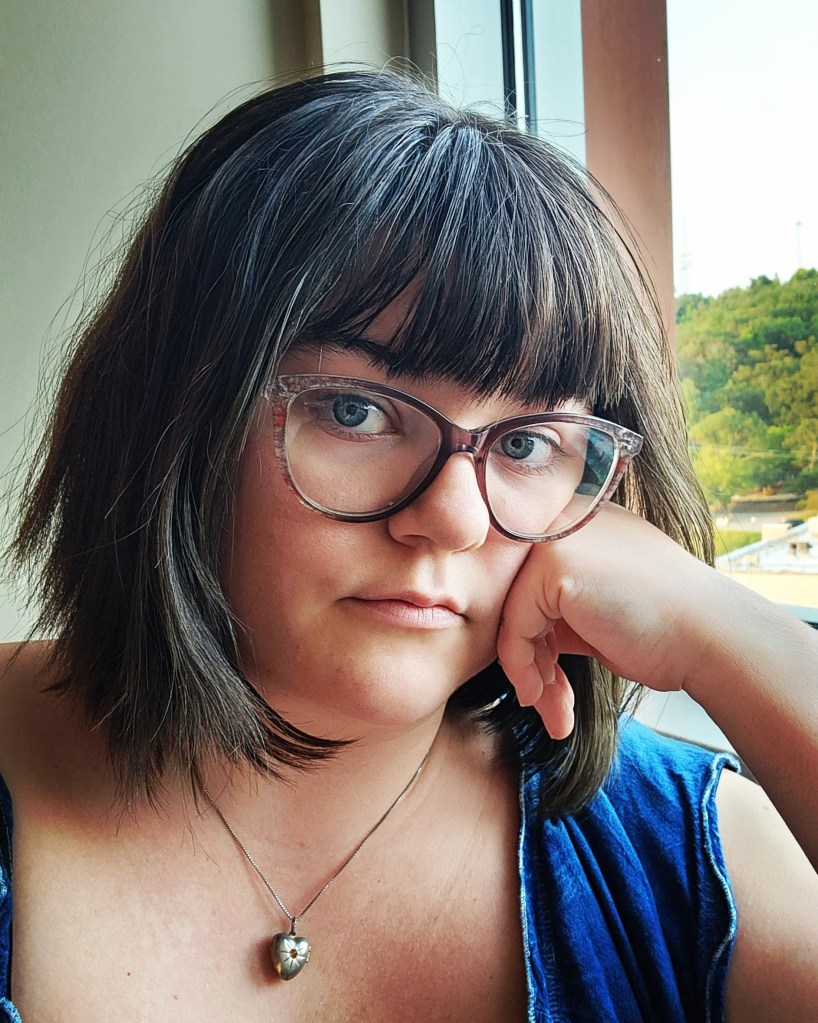
Saro’s gift for both teaching music and holding ritual space are evident from the moment you step in the room… I always feel more connected to…my better self, the natural world, and the mysterious divine after every session. I can’t recommend it enough! –Autumn Skerlec
When
For our Spring 2026 season, we’ll meet on Tuesdays, late March thru late May for 8 weeks + an extra rehearsal & our Finale. Please make a note of the dates and times below.
- March 31st, 6:30-8:30pm
- April 7th, 6:30-8:30pm
- April 14th, 6:30-8:30pm
- April 21st, 6:30-8:30pm
- April 28th, 6:30-8:30pm
- Bealtaine Ritual– Saturday, April 25th, 6:30-9:00pm. Out-of-doors at the Land of Sky UCC. (Make-up date for bad weather is Sat, May 2nd, same time)
- May 5th, 6:30-8:30pm
- May 12th, 6:30-8:30pm
- May 19th, 6:30-8:30pm
- Season Finale: Saturday, May 23rd, 5:00pm-7:00pm (a rehearsal will take place earlier this day, time TBD)
Where
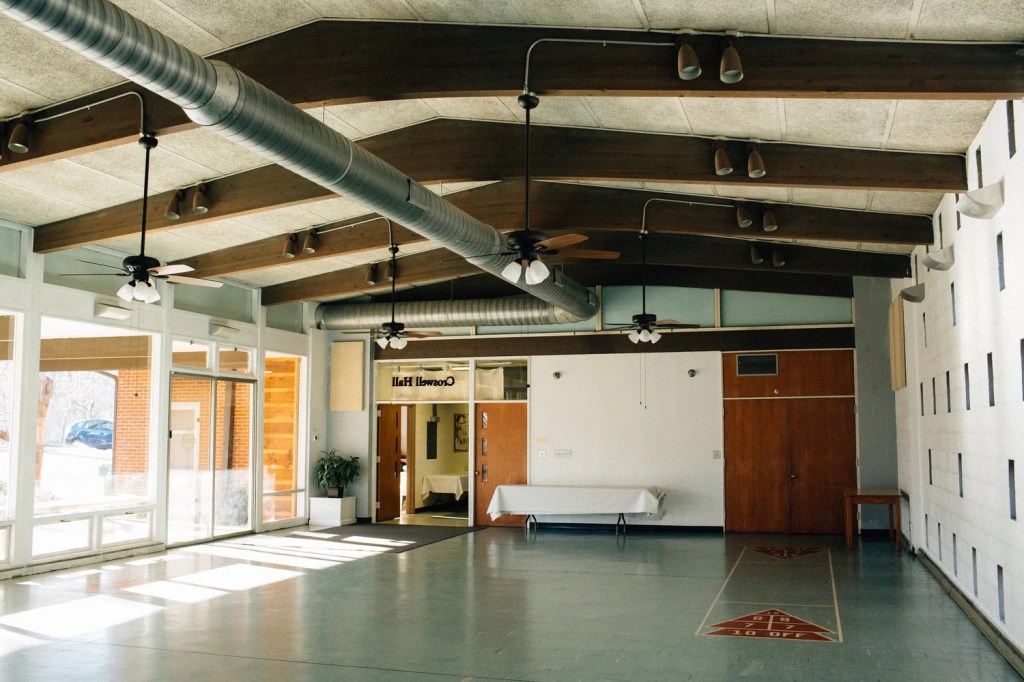
WNC Pagan Choir regular rehearsals takes place in the Fellowship Hall at the Land of Sky UCC, 15 Overbrook Place, Asheville, NC 28805.
Payment
This choir is a commitment for the full season experience. No refunds are issued.
You are required to register and pay before attending. Your payment gives you a spot in choir as well as online access to practice tracks for all songs.
Cost for the season: Sliding Scale $140-$300
The base cost for the season is $140, but folks who feel resourced are encouraged to pay more.
Please pay via Venmo (Saro-Lynch-Thomason), Paypal (blairpathways@gmail.com), or check/cash (checks can be made out to “Sara Lynch-Thomason”).
SCHOLARSHIPS
Some scholarships for this season are available to low-income applicants. Please email Saro directly at sarosingssongs@gmail.com to inquire.
CHOIR ASSISTANT SCHOLARSHIP
An assitant position is available for the Spring 2026 season. In exchange for free attendance, the assistant helps to set up and break down the rehearsal space, assembles folders leading up to the beginning of the season, and provides special assistance at the seasonal ritual and Finale. Assistants are expected to be able to attend the majority of choir sessions. Contact Saro at sarosingssongs@gmail.com to learn more.
VIDEOGRAPHY SCHOLARSHIP
A scholarship is available for someone with experience in videography who is willing to take short clips of our sessions for use in social media (Saro will do the editing and posting). Contact Saro at sarosingssongs@gmail.com to learn more (and please include any samples of work. It’s completely fine to record on your phone).
Accessibility/Illness Policy
Our space is wheelchair accessible.
We will be physically active during our sessions, doing a mix of standing, walking and sitting- but you are invited to take care of your body in the ways that you need. If you need to limit your movement, chairs are always available.
If you have had a covid exposure, have any respiratory illness symptoms (even if it’s just a cold), or are just feeling under the weather: please stay home and come back the next week! Let’s keep our community healthy! Many attendees, including Saro, the facilitator, are immune-compromised. This space is mask optional, but please wear a mask if you prefer!
Pagan Choir Ideology
We honor and recognize the layered legacy of each song, and take time to thank the carriers of the song, as well as the song itself, after singing it.
In the spirit of animacy, we recognize songs as living beings and we also celebrate the peoples and cultures that brought these songs into the world.
This is a space that is affirming of nonbinary, gender expansive and other trans identities.
I (Saro) am aware that in the last 100+ years, neopaganism has had a strong emphasis on recognizing deities in the binary form of the god and goddess, and that some pagan spaces have also become trans-exclusionary. I teach from a polytheistic perspective that recognizes (as historical peoples often did) many deities and spirits of many genders and sexual expressions. We are as diverse as the animate forces themselves- all are welcome here!
Historical practices deserve to be seen in all of their nuance and complexity.
Most of us have complex lineages, with some ancestral practices worth repeating and others worth examining or discarding. We do not benefit from blanket romanticization of past cultures, but rather from carrying forward the pieces that we find meaningful and beneficial. My approach to our songs is scholarly and spiritual, and I aim to present what we learn with honesty towards past people’s beliefs.
Connecting to European ancestral folkways can help to foster a sense of place and belonging, and encourage racial equity.
Connecting to European ancestral folkways can help to heal the wounds caused by white supremacy culture that have purposefully shut out a sense of belonging to culture and place. In other words, recognizing the animacy in all of our lineages can help us connect more strongly to the living lands that we currently inhabit and help us approach all cultures with more appreciation and less appropriation.
I also acknowledge that our choir takes place on the Native lands of the Eastern Cherokee, or ᏣᎳᎫᏪᏘᏱ “Tsalaguwetiyi”, near ᏙᎩᏯᏍᏗ, or “Togiyasdi” now known as Asheville, NC. In our choir, when invoking sacred space, we name that we are surrounded by the many Native spirits of place who guard and care take these lands and have been here since time immemorial. These acknowledgements, however, in no way replace the hands-on work that is needed to return Native lands and restore treaty rights. Click here to learn about a local Cherokee food sovereignty project that you can support.
FAQ
How can I come prepared for WNC Pagan Choir?
Please bring a water bottle and wear loose-fitting, comfy clothing for our sessions. Having a layer on hand is important- we need to be warm enough in order to let our bodies be open and easeful with singing. Please avoid eating big meals ahead of time- we will be breathing into our diaphragms and doing this on a full stomach can feel uncomfortable! Also, please bring a sense of play! We can sometimes feel that spiritual spaces need to be somber- but this is a place where we can bring fun and humor alongside grace and reverence.
What if I can’t make all the dates?
You are welcome to come as you are able, and it’s expected that choir members won’t be able to make every session (life happens!). However, as we get closer to the date of the Finale, we will spend more time focusing on performance during our sessions, and a few additional rehearsals will be scheduled as well.
Are drop-ins allowed?
Folks curious about joining WNC Pagan Choir are allowed as drop-ins for the first two sessions of the season, but after these sessions only committed choir members may attend. Email me at sarosingssongs@gmail.com if you are interested in attending as a drop-in.
What if I think I don’t have a nice voice?
All of us are meant to feel the joy that happens when we vibrate our bodies together- and all of us had ancestors who knew this to be true. For me, singing is first and foremost about community and expression of the divine: all voices are welcome here, even if you’ve been told in the past that you “can’t sing” or “don’t have a good voice.” In choir, we will start every session with vocal warmups that will limber and open our voices. And as we sing our songs, we will learn to listen more closely to those around us, to feel how tone and rhythm is expressed through vibration, helping us tune into pitch and melody.
Will we receive sheet music for the songs?
We do use sheet music for some of the songs we sing, but the majority are learned by ear. More importantly, all lyrics and practice tracks to each song we learn will be accessible online!
Does this choir perform (and does it dance?!)
We host a public, participatory Finale towards the end of the season so that friends and family can learn and enjoy some of our songs. Choir members do perform at this event, and often we incorporate simple dance into the performance, such as circle dances. You are not required to dance if this is out of your comfort zone- this is something we work out during our sessions. Our ritual, however, which takes during the season, is a private event that does not involve any performance for the public.
Can I bring my child?
Children 10 years or older who can focus and participate are welcome in the space as paid, full participants. I ask that you not bring non-participating youth or children, unless they are quiet babies-in-arms.
You must talk to me (Saro) first to make sure the space will be appropriate for your child. Email me at sarosingssongs@gmail.com with any questions.
Does this choir follow a particular faith tradition?
No. WNC Pagan Choir does not draw from a particular pagan discipline, nor is it a mystery school or coven. We do use the Wheel of the Year (a modern, syncretized pagan calendar) as an entry point to explore various pagan holidays, and many of our songs will have a general focus on the North Atlantic Islands (England, Ireland, Scotland). Our approach is respectful but eclectic, so expect anything from modern songs about nettles and waterways to Lithuanian folk song to Anglo-Saxon charms and Gaelic-inspired invocations.
How does the choir address cultural appropriation?
I (Saro) am a diasporic person of many lineages, as are the majority of choir members. When we come from diaspora, we are faced with the challenge of learning how to respectfully reengage with cultural traditions that have been lost to us. The spiritual traditions from which our songs originate are open- they are meant for everyone. I take the time to learn from respected and authentic resources concerning the folkways from which our songs are sourced, and regularly consult with researchers and singers when learning and adapting repertoire.
More questions? Email Saro at sarosingssongs@gmail.com
 Western NC Pagan Choir
Leave a reply to Dot Findlater Cancel reply